
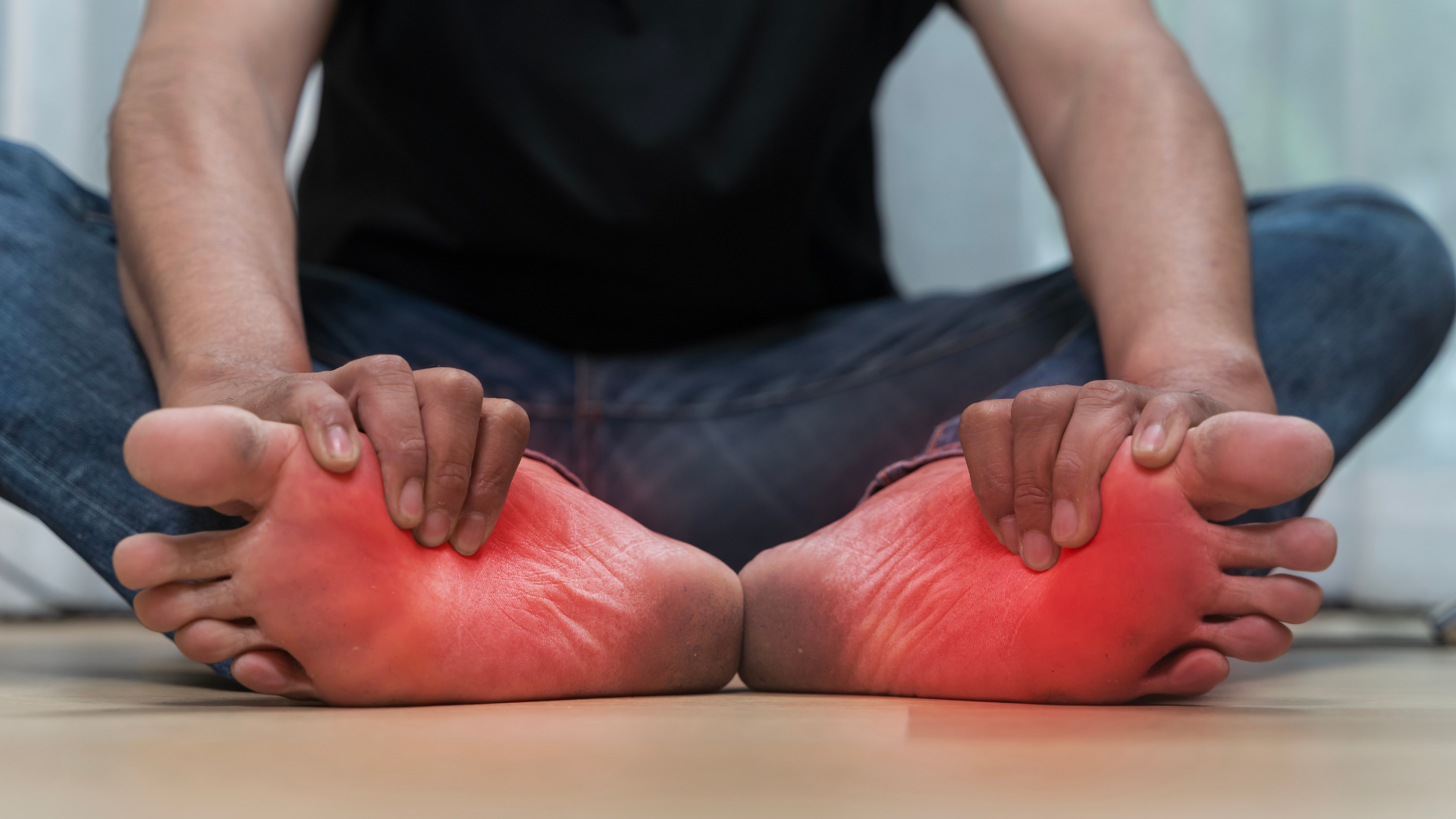
When people think about peripheral neuropathy, they think about pain — the burning, the tingling, the electric sensations that disrupt sleep and make daily life miserable. What gets far less attention is the fall risk that neuropathy quietly creates.
How Neuropathy Disrupts Balance
Balance is not primarily a muscular function — it's a sensory one. Your ability to stand, walk, and navigate varied terrain without falling depends on a continuous stream of sensory information flowing from three systems: your vision, your vestibular system (inner ear), and your proprioceptive system (sensory nerves in your muscles, joints, and skin).
Peripheral neuropathy disrupts the third system. The damaged nerves in your feet, ankles, and legs can no longer accurately report ground surface, foot position, or weight distribution to the brain. The brain receives a garbled or absent signal and has to make movement decisions on incomplete information.
The result is measurably worse balance, even in people who don't report feeling unsteady. Research consistently shows that individuals with peripheral neuropathy have significantly elevated fall rates compared to age-matched peers without neuropathy — and that the fall risk correlates with the degree of sensory loss in the lower extremities.
What Neurological PT Does
The goal of neurological PT for neuropathy is not to reverse nerve damage — that is outside the scope of physical therapy. The goal is to retrain the nervous system to compensate for the missing or degraded sensory input.
Sensory retraining involves exposing the affected areas to a variety of tactile stimuli — different textures, temperatures, and pressures — to stimulate whatever remaining sensory capacity exists and help the brain recalibrate its interpretation of incoming signals.
Balance-specific progressive training systematically challenges the patient on surfaces and in situations that replicate real-world fall risks — foam pads, uneven surfaces, dim lighting conditions, dual-task challenges. The progressive structure ensures the nervous system is consistently pushed to adapt rather than simply maintaining current function.
Visual and vestibular compensation training helps the brain increase its reliance on the visual and vestibular systems to compensate for degraded proprioceptive input. This isn't unlimited — vision and the inner ear have their own limitations — but for many patients, strategic compensatory training produces meaningful improvements in functional balance.
Why In-Home Therapy Matters
Neuropathy-related falls tend to happen in specific, predictable contexts: the transition from carpet to hardwood, getting up from a low chair in the dark, stepping into the shower. These are home-specific hazards that a clinic-based therapist rarely sees.
In-home neurological PT allows the therapist to assess the actual environment, identify specific fall hazards, modify them where possible, and train the patient against the specific surfaces and situations where their risk is highest.
If you or someone you love is managing peripheral neuropathy, the burning and tingling are only part of the story. The balance picture deserves equal attention.
📞 Call 314-252-0345 to schedule an in-home assessment. Medicare accepted.